

What Makes a Good Injection Mold Design?
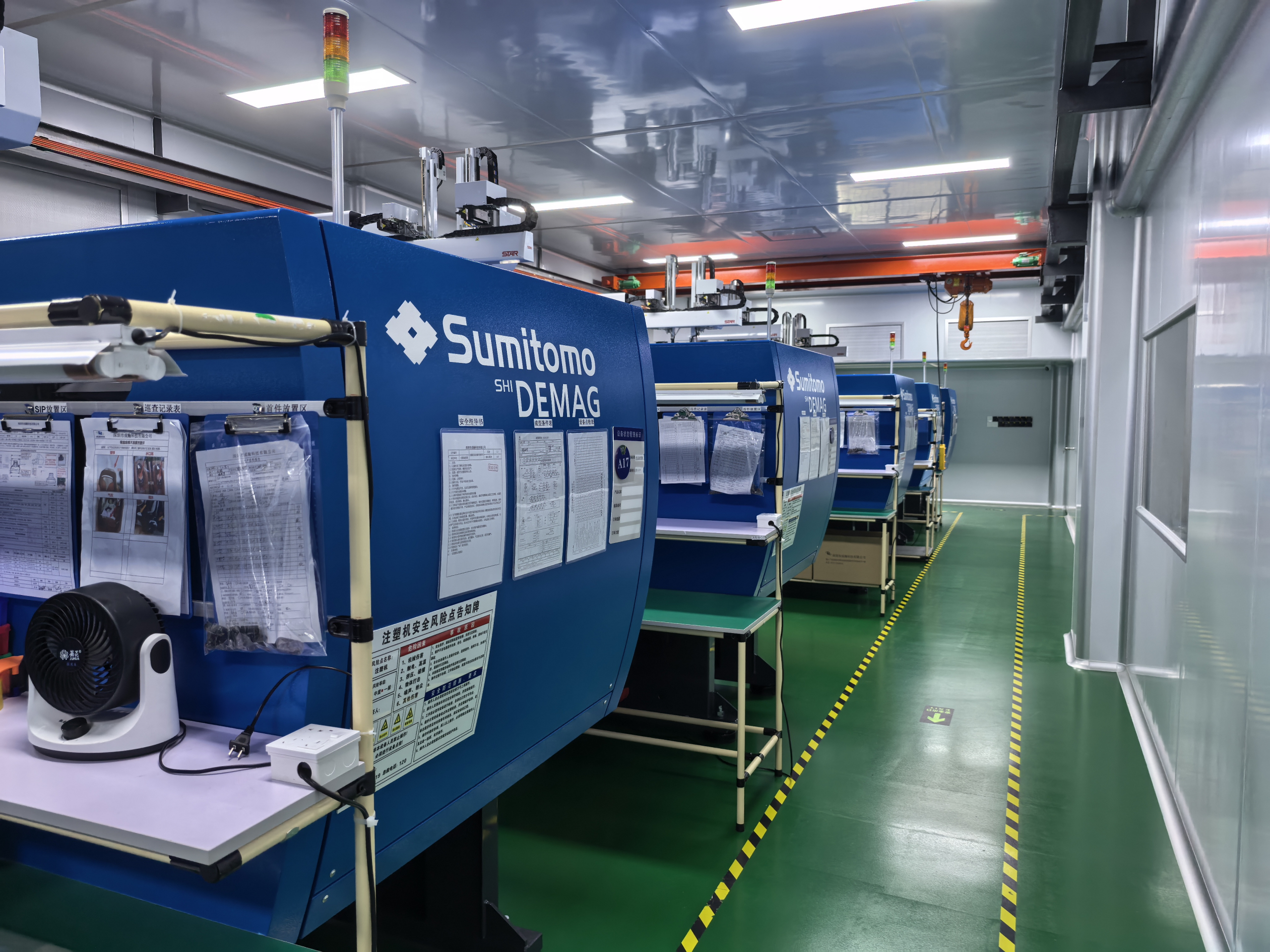
A plastic part may look simple, but the mold behind it is often much more complicated.
A good injection mold does more than simply create the shape of a plastic part. It needs to produce consistent parts, run efficiently, last through production, and make sense from a cost perspective.
So, what actually makes an injection mold design good?
Here are some of the key factors we consider.
1. A Well-Considered Parting Line
The parting line is where the two halves of the mold meet.
Its position affects the appearance of the finished part, flash, ejection, and even how easy the mold is to manufacture.
A poorly chosen parting line can create unnecessary problems during production. A well-designed one makes the part easier to mold and helps keep the visible surfaces clean.
2. Proper Draft Angles
Plastic parts usually need draft angles so they can be released from the mold smoothly.
Without enough draft, the part may stick to the mold, develop scratches, or require excessive ejection force.
The required draft depends on factors such as the material, surface texture, and part geometry.
It may seem like a small detail, but getting it right can make a big difference in production.
3. Efficient Cooling
Cooling is one of the most important parts of injection molding.
After molten plastic fills the mold, it needs to cool and solidify before the part can be ejected.
A well-designed cooling system helps control cycle time, dimensional stability, and warpage.
Poor cooling can lead to uneven shrinkage and longer production cycles.
In other words, cooling design affects both quality and productivity.
4. Reliable Ejection
Once the part has cooled, it needs to come out of the mold without damage.
Ejector pins, sleeves, lifters, or other mechanisms may be used depending on the part structure.
The ejection system needs to apply force in the right places. Otherwise, the part may deform, leave unwanted marks, or become difficult to remove.
Good mold design considers ejection from the beginning—not as an afterthought.
5. Proper Gate and Runner Design
The molten plastic needs a suitable path to enter and fill the cavity.
Gate location, runner size, and the overall filling system can affect:
- Filling balance
- Weld lines
- Air traps
- Surface appearance
- Cycle time
- Material usage
For multi-cavity molds especially, balanced filling becomes important for maintaining consistent part quality.
6. Material Selection for the Mold
The mold itself needs to be made from a suitable material.
Different projects may require different steel grades depending on factors such as:
- Expected production volume
- Plastic material
- Mold life
- Surface requirements
- Budget
A prototype mold and a mold designed for long-term mass production may have very different material requirements.
Choosing the right mold material is therefore a balance between performance, durability, and cost.
7. The Product Design Matters Too
Sometimes the biggest mold problem starts before the mold is even designed.
Wall thickness, sharp corners, deep ribs, undercuts, and other features can make a plastic part more difficult to manufacture.
That is why Design for Manufacturability (DFM) is so important.
Before making the mold, it is worth reviewing the product design and asking:
Can this part be molded efficiently and consistently?
A small design change at the beginning can sometimes save significant mold modifications later.
Good Mold Design Is About More Than the Mold
There is no single formula for a “perfect” injection mold.
A good mold is the result of balancing part design, material, tooling, production volume, quality requirements, and cost.
This is why mold design should not be treated as a separate step from product development.
The earlier potential manufacturing issues are identified, the easier it is to build a mold that works reliably in production.
A plastic part may look simple.
But behind that simple part is a lot of engineering, experience, and attention to detail.